Kishiwada Danjiri Festival 2026: Complete Guide to the October Festival

Giant wooden floats.
Narrow streets.
High-speed turns.
Thousands of people pulling together.
Every autumn, the streets of Kishiwada in Osaka become the stage for one of Japan's most energetic traditional festivals: the Kishiwada Danjiri Festival.
The festival is famous for its massive wooden floats, known as Danjiri, being pulled through local streets at remarkable speed. The most spectacular moment is Yarimawashi, when a Danjiri makes a sharp turn at speed, often with dozens of people working together to control its direction.
But there is much more to the festival than speed.
Behind the excitement are centuries of local traditions, community identity, shrine visits, elaborate wooden carvings, and events that are deeply connected to everyday life in Kishiwada.
If you are planning to visit Osaka in October 2026, this guide will help you understand when the festival takes place, where the main activities happen, what to look for, and how to experience it safely.
What Is the Kishiwada Danjiri Festival?

A Danjiri is a large traditional wooden festival float.
During the festival, local communities pull their Danjiri through the streets using ropes. Each local area has its own Danjiri, procession routes, traditions, and people responsible for operating it.
The most famous part is Yarimawashi — a dramatic high-speed turn.
As the Danjiri approaches a corner, the team accelerates and then attempts to turn the huge float sharply while maintaining control.
It is this combination of speed, teamwork, shouting, music and traditional craftsmanship that makes the Kishiwada Danjiri Festival so distinctive.
And unlike many festivals held in specially prepared venues, Danjiri processions take place on real streets surrounded by homes, shops and everyday life.
That is an important part of understanding the festival.
2026 Kishiwada Danjiri Festival: October Schedule
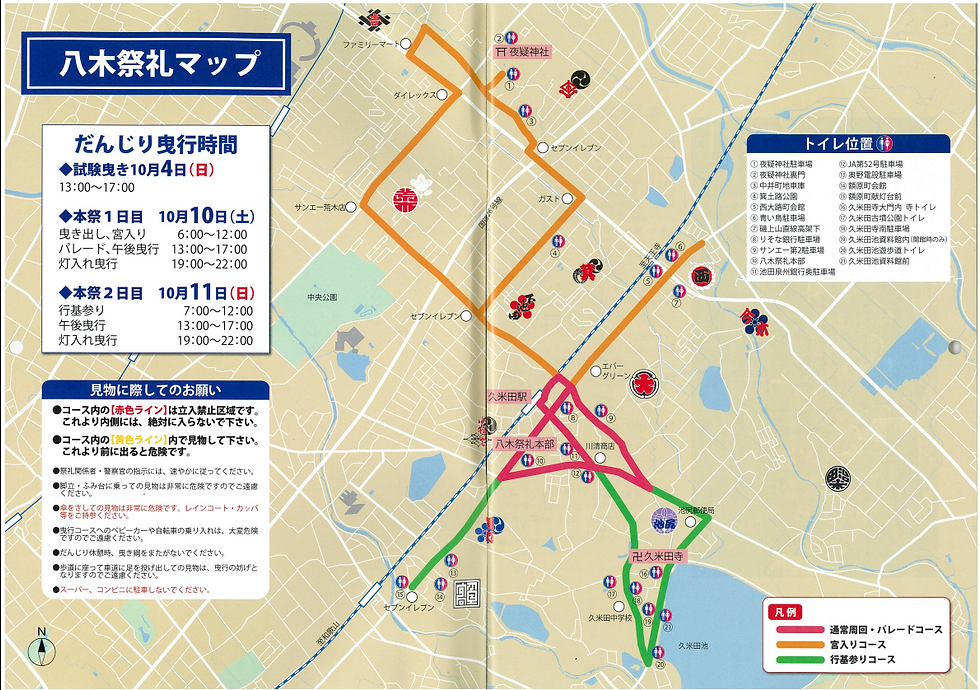
The October festival takes place across six local areas of Kishiwada.
October 4, 2026 — Trial Pulling
13:00–17:00
This is the trial pulling day before the main festival.
The Danjiri are pulled through their respective areas as participants prepare for the main events.
It can be a good opportunity to experience the atmosphere with slightly less pressure than the main festival days.
October 10, 2026 — Yoimiya
6:00–22:00
Yoimiya is the eve of the main festival.
The Danjiri begin moving from early morning, and the streets gradually become filled with people, music, movement and excitement.
For photographers, the changing atmosphere throughout the day is part of the attraction — from morning preparations to the evening festival atmosphere.
October 11, 2026 — Honmiya
7:00–22:00
Honmiya is the main festival day.
This is when many of the major processions, shrine visits, parades and traditional ceremonies take place.
If you only have one day available, this is the key date to consider.
The Six Areas of the October Festival
The October festival is divided into six areas:
Higashi-Kishiwada
Minami-Makamori
Yagi
Yamada
Yamada-Minami
Yamataki
Each area has its own Danjiri, routes, shrine visits and local traditions.
This means there isn't just one single "festival venue."
Instead, the entire area becomes part of the festival.



Which Area Should You Visit?
If it is your first time visiting, choosing an area can make a big difference.
What you want to experience | Area to consider | Why |
🚆 Easy access for a first visit | Higashi-Kishiwada | Activities take place around the JR Higashi-Kishiwada area |
👀 See several types of activities | Higashi-Kishiwada | Danjiri processions and parade activities are relatively concentrated |
🔥 Experience Yarimawashi | Yagi / Yamada and other areas | Different areas have their own high-speed turning points |
⛩️ Traditional shrine ceremonies | Yagi / Yamada-Minami / Yamataki | Each area has its own shrine-related traditions |
📸 Explore different festival atmospheres | Multiple areas | Each community has its own routes, scenery and atmosphere |
For first-time visitors
If you have never experienced the festival before, Higashi-Kishiwada is a practical place to start.
It is relatively easy to reach by train, and several festival activities take place around the station and surrounding streets.
However, if your main goal is to experience Yarimawashi, don't assume that staying near the station will show you everything.
Different areas have their own routes and turning points, so moving between areas can reveal a very different side of the festival.
The Most Exciting Part: Yarimawashi

If you have seen videos of the Kishiwada Danjiri Festival online, chances are you have seen Yarimawashi.
The name refers to the dramatic technique used to make a Danjiri turn sharply while being pulled at speed.
The Danjiri can weigh several tons, yet the participants attempt to change its direction with incredible timing and coordination.
This is where the festival's speed and energy become most visible.
But there is an important point for visitors:
The closer you stand, the more exciting it may look — but the closer you are to the danger.
Never enter the Danjiri route simply to get a better photograph or video.
The procession moves quickly, and the direction of the Danjiri can change suddenly.
Always follow barriers, police instructions, festival staff and local guidance.
Shrine Visits and Traditional Ceremonies
The Kishiwada Danjiri Festival isn't only about racing through the streets.
Many areas also have important shrine visits and traditional ceremonies, known as Miya-iri and other local rituals.
Different communities follow different routes and traditions.
For example, the October festival includes shrine-related activities in areas such as Yagi, Yamada, Yamada-Minami and Yamataki.
One of the interesting things about visiting different areas is seeing how the same Danjiri tradition takes slightly different forms depending on the local community.
Gyoki-mairi: A Traditional Procession
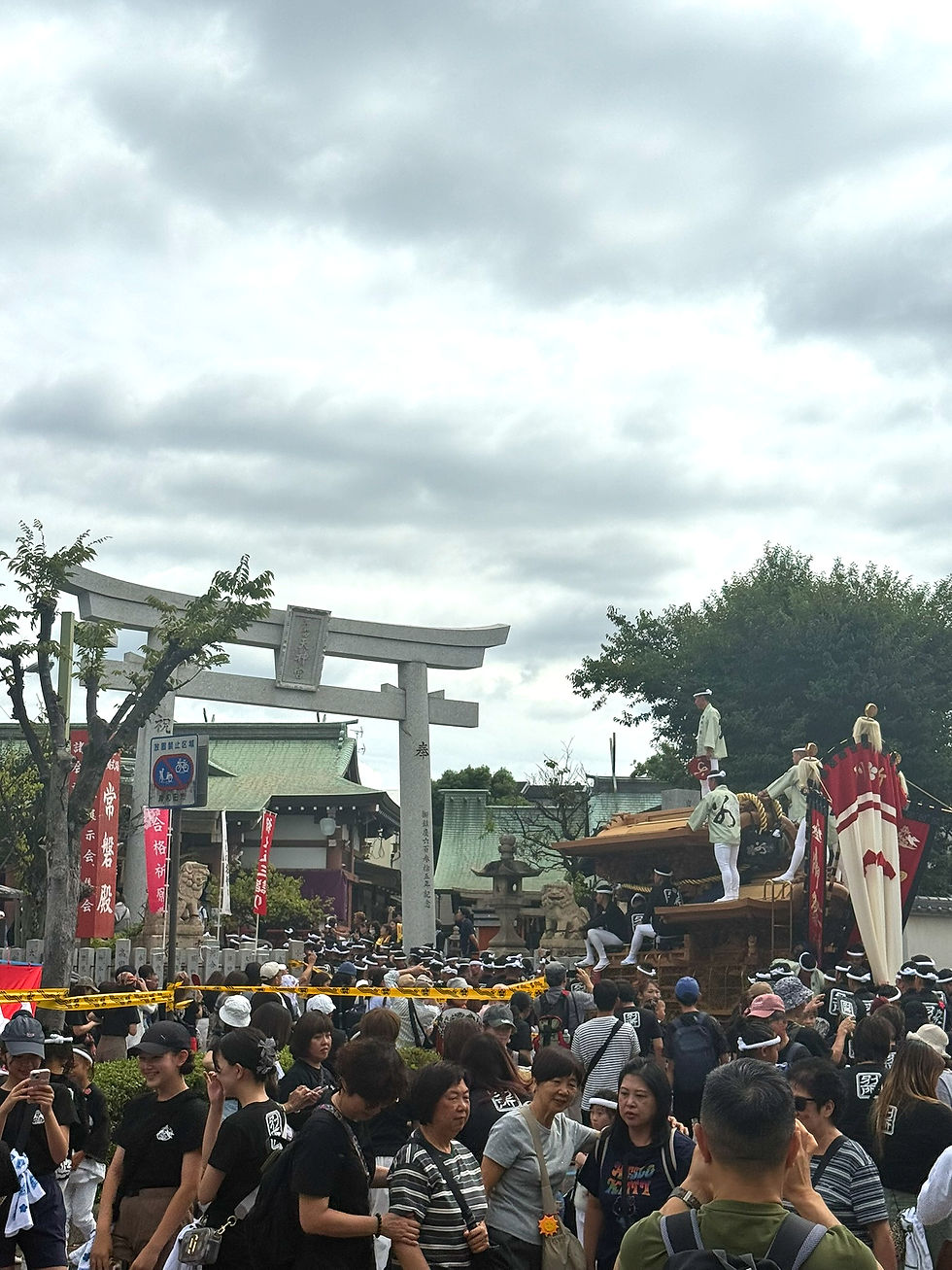
One of the notable events associated with the October festival is Gyoki-mairi.
On October 11, Danjiri from the relevant communities participate in a traditional procession toward Kumedadera Temple.
The event is connected with the local history and religious traditions of the area.
For visitors interested in the cultural side of the festival, events such as this offer a very different experience from watching Yarimawashi.
It is slower, more ceremonial and gives a better sense of how deeply the festival is connected to local communities.

Look Beyond the Speed: The Danjiri Carvings

If you only watch the Danjiri racing through the streets, you can easily miss one of the most impressive aspects of the festival: the craftsmanship.
Traditional Danjiri are decorated with extremely detailed wooden carvings.
Scenes, figures and patterns are carved into the wood, creating intricate three-dimensional decorations.
Some details are difficult to appreciate when a Danjiri is moving at full speed.
If you have time, visit the Kishiwada Danjiri Kaikan (Danjiri Hall) to learn more about the history, construction and craftsmanship behind these enormous floats.
It is a completely different way of appreciating the festival.
Instead of asking only:
How fast can it go?
You begin to notice:
How much history and craftsmanship is actually built into it?
The Other Side of the Festival: Speed, Safety and Everyday Life
The incredible speed of the Danjiri is also one of the reasons the festival requires careful coordination.
Unlike a performance held in an isolated venue, the festival takes place on streets that are normally part of people's everyday lives.
That means the festival involves traffic control, road closures, pedestrian movement, residents, businesses and the coordination of a large number of participants and spectators.
The high-speed pulling also carries genuine risks.
Danjiri can come close to buildings, roadside objects and crowds, while participants themselves are exposed to the risks associated with moving and operating a large float at speed.
For visitors, this is why safety should always come before getting the perfect photograph.
Keep a safe distance.
Do not cross into the procession route.
Follow local staff and police instructions.
And if you are bringing children or pets, be especially careful around crowded areas and moving Danjiri.
Can the Kishiwada Danjiri Festival Continue Forever?
There is another question surrounding traditional festivals like this:
How can a festival deeply rooted in local community life continue in the future?
The Kishiwada Danjiri Festival is closely connected to local communities, participation and the passing down of traditions from one generation to the next.
At the same time, a festival of this scale inevitably needs to coexist with modern everyday life — including traffic, residents, businesses and safety considerations.
It would be too strong to say that the festival is about to disappear.
But traditional festivals are never completely static.
The way they are organised, experienced and passed on can change as communities themselves change.
That is part of what makes seeing the festival today meaningful.
If you have always wanted to experience Kishiwada Danjiri Festival in person, this may be a good time to go and see it for yourself.
Not because we can predict when the festival might change, but because no traditional festival is guaranteed to look exactly the same forever.
Tips for First-Time Visitors
1. Arrive early
The festival begins early, especially on Yoimiya and Honmiya.
Arriving early gives you more time to understand the area before the streets become extremely crowded.
2. Wear comfortable shoes
You may walk considerably more than expected.
If you plan to move between areas, comfortable shoes are essential.
3. Don't stand too close
The Danjiri are large, heavy and fast.
The best photograph is never worth putting yourself in danger.
4. Follow local instructions
Road closures and viewing areas can change according to the day's procession.
Follow police, staff and local community instructions even if they differ from what you expected.
5. Bring a camera — but don't watch the entire festival through your screen
Some of the most memorable moments are not necessarily the ones you capture.
Listen to the shouting.
Hear the drums.
Feel the crowd react as the Danjiri approaches.
Sometimes the best way to experience the festival is simply to put your phone away for a moment.
A Different Way to Experience Kishiwada
The Kishiwada Danjiri Festival is not simply a performance for tourists.
It is a local tradition taking place within the streets and communities where people live.
That is why the experience can feel so intense.
You aren't watching a show from a distant stadium seat.
You are standing beside streets filled with people, hearing the sound of the Danjiri approaching, watching teams work together, and seeing generations of local traditions continue around you.
For a traveller, that is what makes the festival special.
Planning a Road Trip Around Osaka?
If you're exploring Osaka and the surrounding Kansai region by campervan, Kishiwada can easily become part of a wider road trip.
From Osaka, you can continue south toward Wakayama and the Kii Peninsula, or explore the coastline and countryside around southern Osaka.
With a campervan, the journey doesn't have to end when the festival does.
Sometimes the best part of travelling through Japan is following the road to wherever the next story begins.
See you on the road. 🚐🌿


Comments